As the demand for clean, reliable, and affordable energy continues to grow, Uttarakhand’s Solar Subsidy Scheme 2025 has emerged as a powerful initiative to support homeowners, businesses, and institutions in adopting solar energy. Through government-backed incentives, streamlined processes, and increased transparency, the state aims to accelerate rooftop solar adoption while reducing electricity costs for residents. In this detailed guide, we explain exact steps, required documents, benefits, subsidy amounts, and the full application process to help you successfully apply for solar subsidy in Uttarakhand in 2025.
Understanding the Solar Subsidy Scheme in Uttarakhand
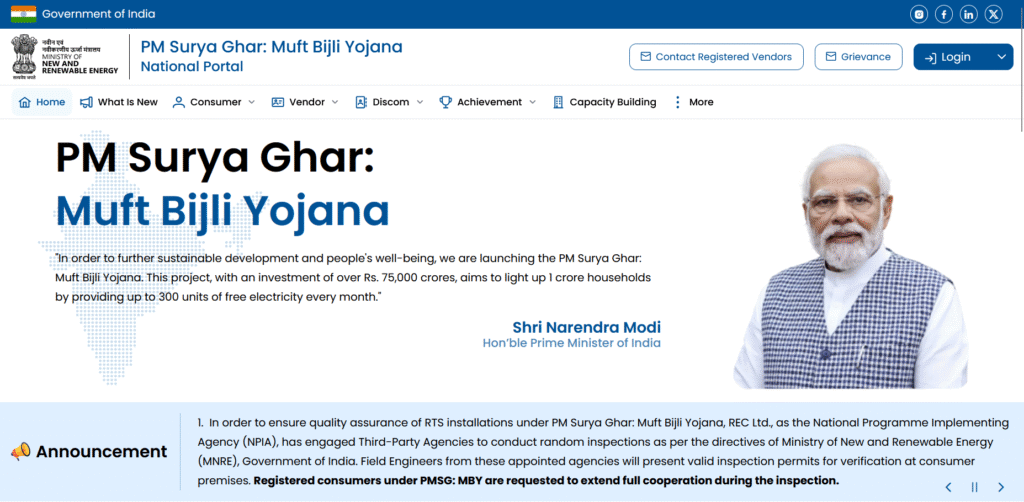
The Government of India, through the Ministry of New and Renewable Energy (MNRE), offers generous subsidies to encourage rooftop solar installations under the PM Surya Ghar: Muft Bijli Yojana and other state-level programs. Uttarakhand has embraced this mission by simplifying registration, approval, and disbursement processes. Subsidies are directly credited to the beneficiary’s bank account after installation and inspection.
This subsidy not only lowers the upfront investment for solar systems but also delivers long-term savings, energy independence, and significantly reduced electricity bills.
Types of Solar Systems Eligible for Subsidy in Uttarakhand
Before applying, it’s important to know which systems qualify for subsidies:
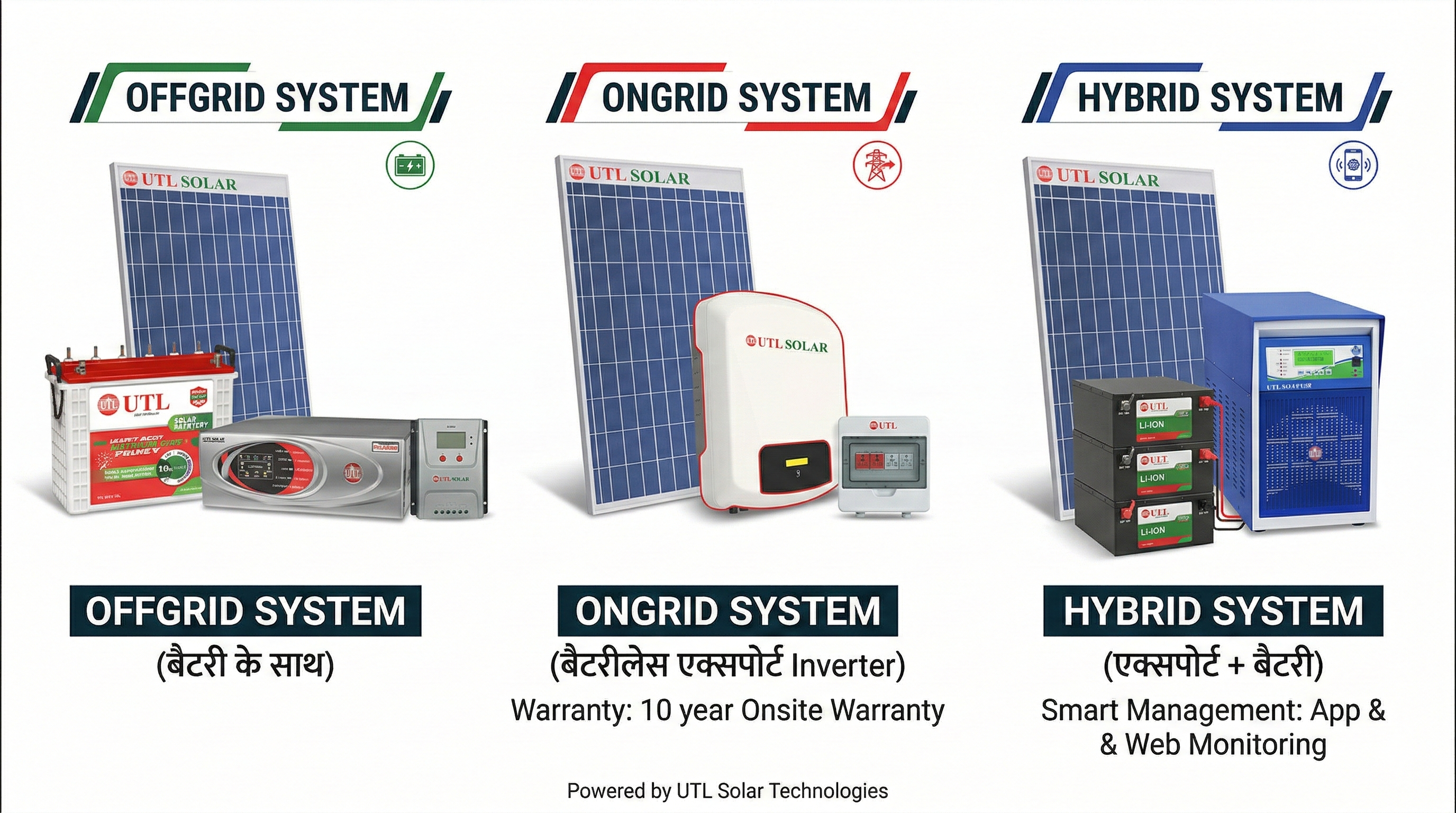
1. Grid-Tied Rooftop Solar System
Most common and fully eligible for subsidy. It connects with the grid and reduces your electricity bill through net metering.
2. Hybrid Solar System
Some hybrid systems are eligible if they meet MNRE technical standards and installation guidelines.
3. Off-Grid Systems
Usually not subsidized, except under special government programs for remote areas.
Eligibility Criteria for Solar Subsidy in Uttarakhand
To ensure your application qualifies, make sure the following conditions are met:
- Applicant must be a resident of Uttarakhand.
- Installation must be on a residential rooftop (for residential subsidy).
- System capacity must align with UJVNL / UPCL guidelines.
- Installation must be done by a registered vendor under the national portal.
- System must meet all MNRE technical standards.
- Net metering approval is mandatory before subsidy processing.
Documents Required for Solar Subsidy in Uttarakhand
Prepare the following documents to avoid delays:
- Aadhar card
- PAN card
- Recent electricity bill (UPCL)
- Passport-size photograph
- Bank account details (for subsidy transfer)
- Property ownership proof (if required)
- Installation photographs
- Technical documentation from vendor
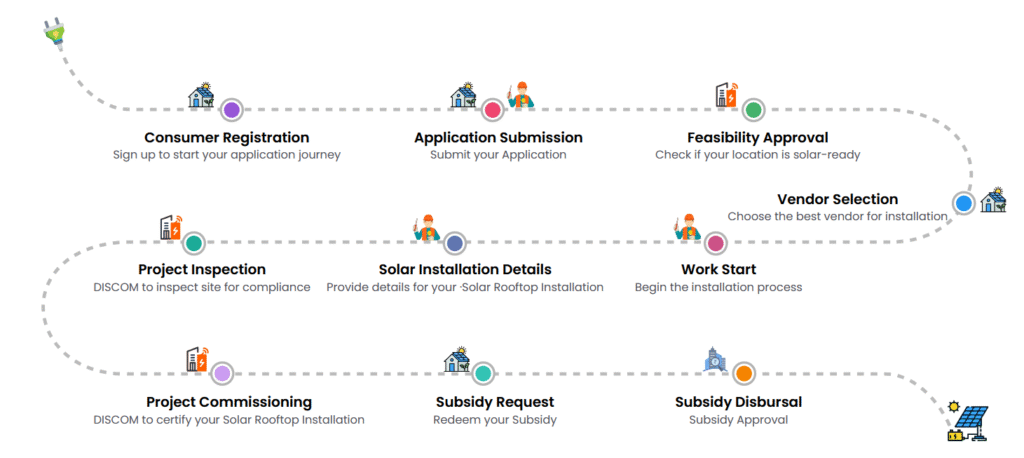
Step-by-Step Process: How to Apply for Solar Subsidy in Uttarakhand (2025)
This is the most important part—here is the complete workflow for applying and receiving subsidy.
Step 1: Register on the National Solar Portal (MNRE Portal)
Visit the official PM Surya Ghar National Portal and create your account using:
- Mobile number
- Email ID
- Consumer number (from UPCL electricity bill)
Once registered, choose the “Apply for Rooftop Solar” option.
Step 2: Select a Registered Vendor
Only vendors listed on the National Portal are authorized to install subsidized rooftop solar systems.
Check for:
- Vendor ratings
- Customer reviews
- Installation experience
- Warranty and service support
- MNRE certification
Choosing the right vendor ensures compliance and smooth subsidy approval.
Step 3: Apply for Technical Feasibility Approval (TFA)
UPCL will verify your request and approve the technical feasibility based on:
- Electricity load
- Roof area
- Transformer capacity
- Grid compatibility
Once approved, you may proceed with installation.
Step 4: Install the Rooftop Solar System
Your selected vendor will install the solar system as per MNRE standards. Ensure that:
- Only ALMM-approved solar panels are used
- Inverter must be BIS-certified
- Safety protocols are followed
- Proper earthing & wiring completed
- Net meter-ready configuration done
Take installation photos as they are required later.
Step 5: Apply for Net Metering
Submit a request for a net meter through the portal. UPCL will:
- Inspect the installed system
- Verify alignment with standards
- Install the net meter
- Update your consumer account with solar configuration
Net metering is crucial for subsidy eligibility.
Step 6: System Inspection and Commissioning
A UPCL or government-authorized official will conduct a site inspection. They check:
- System quality
- Working condition
- Compliance with MNRE norms
- Metering accuracy
Once approved, they issue the Commissioning Certificate.
Step 7: Upload Documents and Bank Details
Now upload the following:
- Installation photos
- Commissioning certificate
- Vendor invoice
- Bank account details
- Technical specifications
Ensure that all entries match your UPCL records.
Step 8: Subsidy Disbursement
After successful verification, the subsidy amount will be transferred to your bank account within 30–60 days.
You will receive an SMS and portal notification once the subsidy is credited.